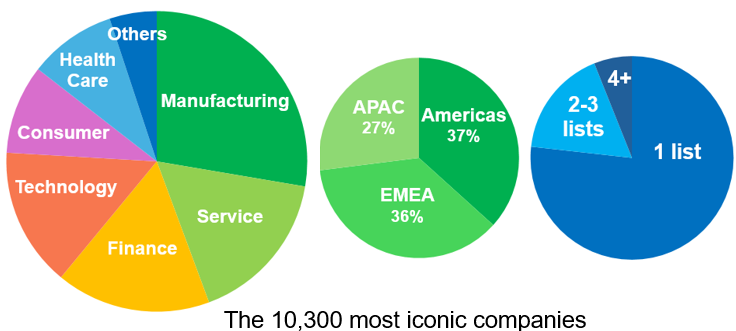
With over 360 million companies worldwide, identifying the most influential ones is essential. This article highlights 10,300 elite companies sourced from 19 prestigious lists, including the Global Fortune 500, Euro Stoxx 600, and Nikkei 225.
Why are these lists so important? Curated by reputable publishers, they are invaluable for identifying key companies that may not always be widely known. Monitoring these lists ensures that you stay informed about all the valuable companies relevant to your activities.
The differences and overlaps between these lists are outlined in this article. Each list is available for free download and provides links to view the organizational charts of every company, as well as their subsidiaries.
A Dynamic Global Market
Of the 19 lists, 12 are stock indexes with inclusion rules that have remained largely unchanged for decades. Three lists were created recently: Fortune 500 China, Fortune 500 Europe, and Fortune 500 SEA.
These companies set the standard across industries, from manufacturing to technology. Their headquarters are spread across the Americas, EMEA, and Asia-Pacific, reflecting a multipolar world.
About 20% of the companies on these lists change annually, highlighting the dynamic nature of global business.
Minimal Overlap
Most companies (76%) appear on only one list, making each list uniquely valuable. Only 6% of companies are featured on four or more lists.
The 3 Global Lists
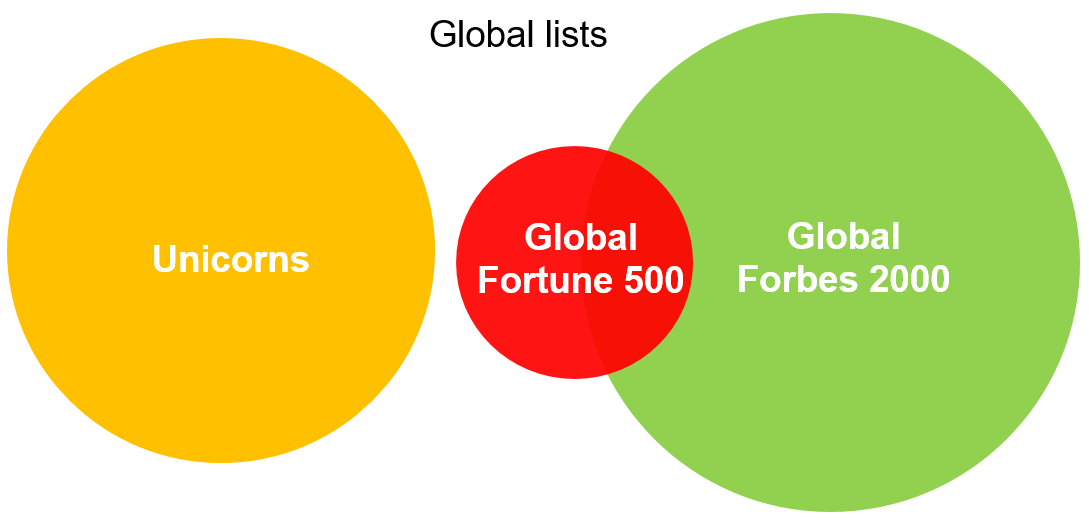
The Global Fortune 500 ranks public and private companies by revenue, while the Global Forbes 2000 ranks publicly traded companies based on assets, profits, and valuation. The revenue thresholds for these lists are $32 billion and $6 billion, respectively.
The Unicorn List tracks private startups valued at over $1 billion, spotlighting high-potential companies attracting significant investment.
The 16 Regional Lists
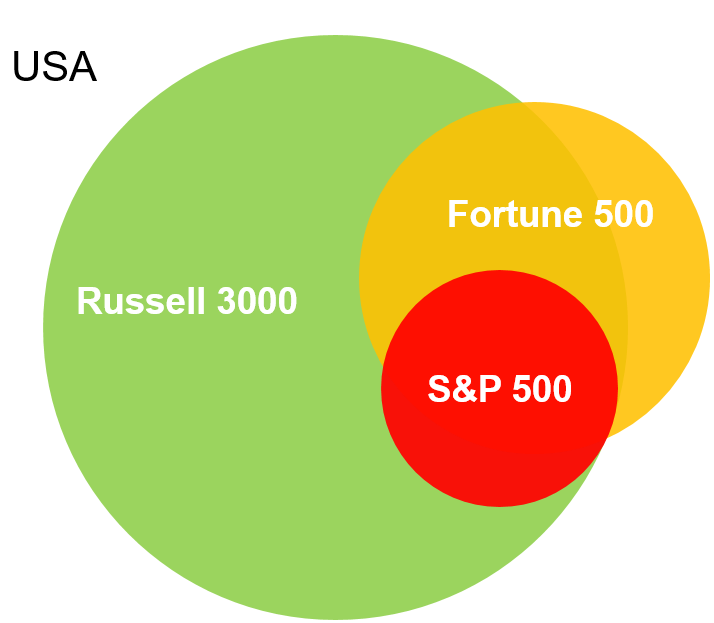
In the U.S., key lists include the S&P 500 and Russell 3000, covering 80% and 98% of the U.S. market, respectively. The Fortune 500 ranks the largest public and private companies, with the 1,000th company generating $2.5 billion in revenue.
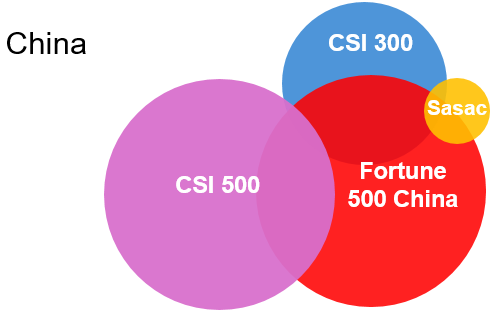
In China, the CSI 300 and 500 track the largest public companies, while the Sasac list highlights government-owned firms. The Fortune 500 China showcases the largest public, private, and locally owned companies.
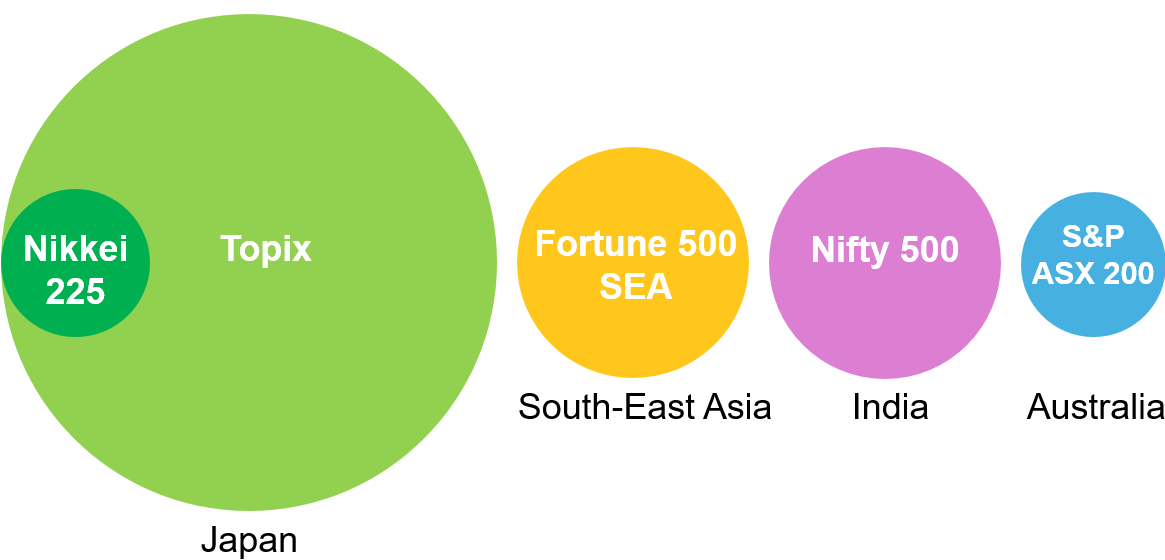
In the Asia-Pacific region, Japan’s Nikkei 225 and Topix, India’s Nifty 500, and Australia’s S&P/ASX 200 are major indexes. The Fortune 500 SEA ranks leading companies in Southeast Asia.
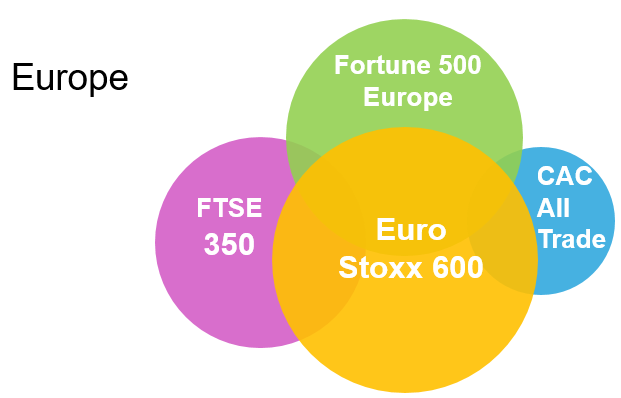
In Europe, the Euro Stoxx 600 and Fortune 500 Europe rank top companies, overlapping with national indexes like the FTSE 350 in the U.K. and the CAC All-Tradable in France.
How to Benefit from These Iconic Companies
- Benchmark your business: Download the lists to learn from industry leaders and access their organizational charts for insights on trends and best practices.
- Engage influential executives: Use these lists to identify decision-makers and craft targeted outreach for recruitment or business development.
- Leverage your network: Tap into your contacts within these companies to foster introductions and build meaningful relationships.
- Target high-potential opportunities: Focus on sectors and companies that align with your goals. Tailor your approach to these key players.
- Stay updated: Set up alerts for executive changes and other important developments to stay ahead of new opportunities.
Takeaways
- Download the Lists: Click [here] to access the lists for free and set up email alerts.
- Engage Executives: Target decision-makers and refine your strategy for better results.
By focusing on these 10,000 iconic companies (download the full list), you can streamline your strategy, prioritize high-potential leads, and close more deals with the world’s most influential companies.
Methodology: Data as of September 1, 2024. Lists are updated daily. For more information, contact us at [email protected].
Want more? Get fresh monthly insights and tips by email.
